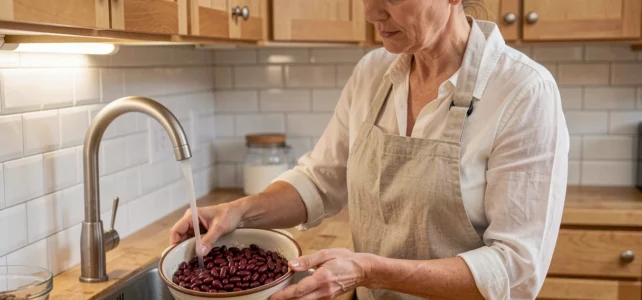
Lectins are plant proteins capable of binding to carbohydrates present on the surface of intestinal cells. This property, which serves as a defense mechanism for plants against their predators, can cause digestive disorders in humans when certain foods are consumed raw or undercooked. Reducing their impact does not involve eliminating entire families of foods, but rather employing precise preparation techniques.
Thermal inactivation of lectins: the temperature threshold matters
Cooking remains the main lever to neutralize lectins, but not all cooking methods are equal. Boiling at 100 °C for a sufficient duration is the only reliable technique to degrade these proteins in legumes.
A recent opinion from the European Food Safety Authority (EFSA) in 2026 specifies the minimum sequence for dried beans: soaking for 6 to 12 hours followed by boiling for at least 30 minutes. The soaking water must be discarded before cooking. The document emphasizes that steaming, baking, or microwaving is less effective in inactivating lectins.
This point is worth noting: a bean that appears visually cooked may still contain a significant amount of active lectins if the internal temperature has not reached the required threshold for long enough. The tender texture of the bean is a complementary indicator, not a substitute for boiling time. For health information on the Optisanté website, the preparation process for legumes is also detailed there.
EFSA adds that in a scenario where about half of the lectins remain active after insufficient cooking, there is a risk for all age groups. In contrast, properly prepared legumes do not pose a specific problem related to lectins.

Soaking and germination: two distinct mechanisms of reduction
Soaking and germination act on lectins through different pathways. Soaking dissolves some of the water-soluble lectins into the water, which is then discarded. Germination, on the other hand, activates endogenous enzymes in the seed that gradually degrade these proteins.
What soaking really does
Dipping beans or lentils in water for several hours is not enough to eliminate all lectins. Soaking reduces their concentration, but its main role is to prepare the legume for more effective cooking. Soaking without subsequent cooking remains insufficient for high-lectin foods like raw red beans.
Changing the soaking water at least once increases elimination. This simple step is often overlooked.
Germination and enzymatic activity
Germinating seeds or legumes for two to three days significantly reduces their lectin content. The germination process mobilizes the seed’s reserves, including lectins, to fuel the growth of the sprout.
This technique works particularly well on lentils and chickpeas. It has an additional advantage: germination improves the bioavailability of certain nutrients such as iron and zinc, which are partially sequestered by anti-nutrients in the dormant seed.
Fermentation and reduction of lectins in everyday foods
Fermentation constitutes a third mechanism, distinct from heat and soaking. The microorganisms involved in fermentation (lactic acid bacteria, yeasts) produce enzymes that degrade lectins over time.
Sourdough bread illustrates this process well. The long fermentation of natural sourdough degrades a significant portion of the lectins present in wheat flour, whereas a conventional yeast bread, which ferments for a much shorter time, retains more. Tempeh, made from fermented soybeans, follows the same logic.
Traditional fermented foods (miso, kimchi, sauerkraut) also benefit from this natural reduction. The longer the fermentation, the more extensive the degradation of lectins.
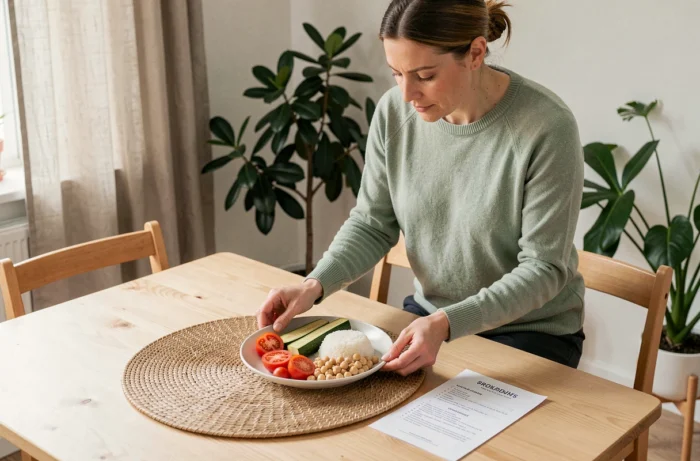
Which foods to prioritize in your diet
Not all foods containing lectins present the same level of risk. Focusing preparation efforts on the most problematic categories avoids unnecessarily complicating meals.
Foods that require special attention in preparation:
- Dried beans (red, white, black) contain some of the most resistant lectins, notably phytohemagglutinin. Their raw or undercooked consumption has caused documented poisoning.
- Whole grains like wheat, rye, and barley contain wheat germ agglutinin (WGA), a lectin that is more heat-resistant. Sourdough fermentation remains the most effective means to reduce it.
- Nightshades (tomatoes, potatoes, eggplants, peppers) contain lectins concentrated in the skin and seeds. Peeling and seeding these vegetables before cooking reduces exposure.
In contrast, certain nuts (almonds, macadamia nuts, pistachios) and most fruits contain negligible amounts of lectins. No specific preparation precautions are necessary for these foods.
Adapting your cooking without disrupting your diet
Eliminating legumes or whole grains from your diet to avoid lectins means depriving yourself of fiber, plant proteins, and micronutrients whose benefits for digestive health and the gut microbiome are well documented.
The most coherent approach combines several techniques depending on the food:
- For dried legumes: prolonged soaking, water change, boiling at a rolling boil until tender
- For grains: prefer long-fermented sourdough bread over industrial bread
- For nightshades: peeling, seeding, and cooking before consumption
- For seeds and nuts: overnight soaking or short germination
These actions can be integrated into an ordinary cooking routine. Soaking can be started the night before, germination can be managed on a corner of the countertop, and peeling tomatoes takes just a few seconds after a quick dip in boiling water.
The real risk associated with lectins is limited to legumes consumed raw or undercooked. For the rest of the diet, traditional preparation techniques, refined over centuries of culinary practice, are sufficient to render these plant proteins harmless.