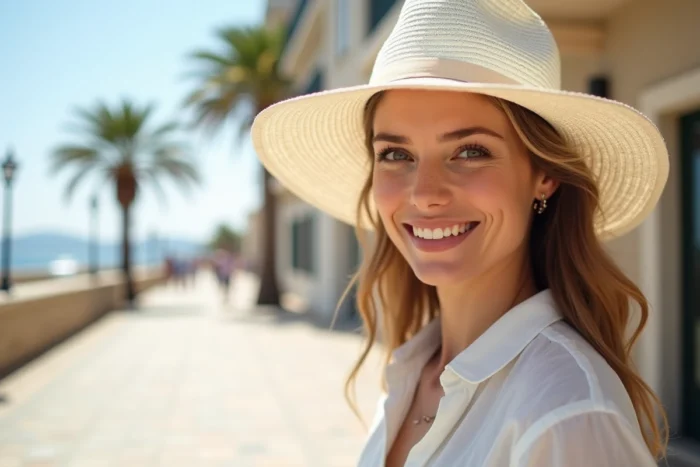
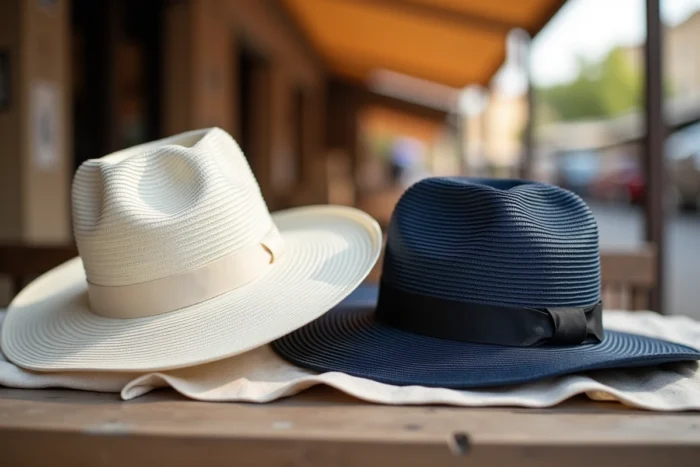
You hesitate between a white hat and a black hat before going out in the bright sun. The common reflex is to choose white “because it protects better.” The reality is more nuanced: color alone does not determine the level of protection. The weave of the fabric, the width of the brim, and UPF certification matter just as much, sometimes more, than the shade.
Light or dark color: what really happens on your head
A black hat absorbs more solar radiation than a white hat. Field tests on headgear exposed for several tens of minutes in full sun show a temperature difference of about 10 to 15 °C between a black surface and a white surface, with the same material. In practical terms, a black hat gets significantly hotter than a white hat, making it less comfortable during prolonged exposure.
On the other hand, dark shades block ultraviolet rays better. Black, navy blue, or dark gray absorb UV rays before they penetrate the fabric. White, on the other hand, reflects visible light but allows a greater proportion of UV rays to pass through if the weave is not tight enough.
The choice between thermal comfort and UV filtration thus depends on your situation. For an hour’s stroll in the city, the difference remains marginal. For an entire day of hiking or on a construction site, it really changes your experience. A comprehensive guide helps to better understand how to protect your head from the sun depending on the context of use.

Weave and UPF certification: criteria that matter more than color
Have you ever noticed that when holding a fine straw hat in front of a lamp, light passes through? This is exactly what happens with UV rays. A loosely woven fabric offers poor protection, regardless of its color.
The decisive parameter is the density of the weave. A thick, tightly woven white cotton will filter UV rays better than a fine black polyester. Recent prevention recommendations emphasize this color plus weave combination: for children, for example, wide-brimmed hats in light colors but tight fabrics, even certified UPF 50+, are recommended.
Understanding the UPF index
The UPF (Ultraviolet Protection Factor) index measures the amount of UV that a fabric allows to pass through. A UPF 50+ fabric only lets through a tiny fraction of the radiation. This standard takes into account color, fiber type, weave, and any chemical treatments.
When looking for a sun hat, check the UPF certification rather than the displayed color. A beige hat certified UPF 50+ offers better protection than a lightweight black cotton hat without certification.
Concrete criteria for evaluating a hat
- The density of the fabric: hold the hat up to the light. If you can clearly see the light source through it, the protection is insufficient.
- The material: tightly woven cotton and technical polyester provide a good barrier. Natural straw with wide weaves lets too much radiation through.
- The presence of a UPF label: this is the only objective indicator of the UV filtration level of the fabric.
Brim width and hat shape: protecting the face and neck
Color and fabric are not everything. A wide-brimmed hat protects the face, ears, and neck, three areas particularly exposed to UV rays. A cap, even if black and made of dense fabric, leaves the neck and ears completely uncovered.
For truly effective sun protection, choose a hat with brims that are at least seven to eight centimeters all around. Models like bucket hats or wide-brimmed hiking hats cover the entire upper body well.
In comparison, a classic cap only protects the forehead and the top of the head. If you opt for a cap for style preference, at a minimum, apply sunscreen on the ears, neck, and sides of the face.
Which hat to choose based on your activity in the sun
The “best” hat depends on what you are going to do. Here are the most relevant combinations based on the context.
- Prolonged outdoor work (construction, agriculture): light-colored cotton or technical polyester hat, wide brims, certified UPF 50+. Recent recommendations for workers exposed to heat favor light shades to limit thermal absorption, combined with breathable clothing.
- Summer hiking or trekking: a wide-brimmed hat made of lightweight technical fabric, preferably light or khaki. Models with integrated ventilation reduce the feeling of heat.
- Beach or pool: a bucket hat made of tightly woven fabric or a straw hat with very dense weaves. Be cautious of decorative straws with large holes, as their UV protection remains low.
- Everyday urban use: a panama, a medium-brim fedora, or a cotton bucket hat. Style plays a role, but keep in mind that narrow brims offer less protection.
And what about cooling hats?
A recent trend involves so-called “cooling” hats that combine high UPF protection with cooling mechanisms (quick-drying fabrics, reflective materials). These technical models provide an interesting alternative for those who want to block UV rays while limiting overheating, without having to choose between black and white.
White, black, or other: the short answer
White keeps the head cooler, black filters UV rays better with the same fabric. If you must remember one rule, keep this one in mind: a light-colored hat made of tightly woven fabric or certified UPF 50+ offers the best compromise between thermal comfort and sun protection.
Color remains one criterion among others. The width of the brim, the density of the textile, and the certification matter more. A loosely woven white hat offers less protection than a dark gray hat made of dense fabric. Rather than debating between white and black, first check what the fabric actually allows to pass through.