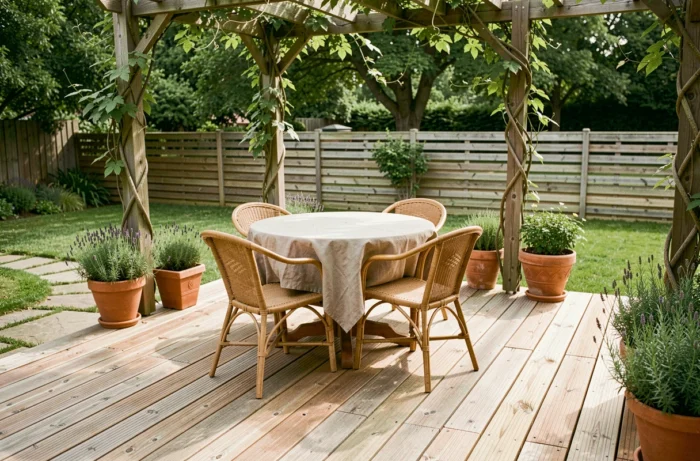
A successful wooden garden is not just about laying a deck and a few planters. The choice of wood species, how the wood ages under rain, recent regulatory constraints on hedges and clearing: these parameters condition the durability and aesthetics of your outdoor layout far more than the chosen decorative style.
Black locust, treated pine, composite: which outdoor wood ages best
Have you ever noticed those grayish decks after two or three winters? The problem rarely comes from poor maintenance. It stems from the choice of wood species.
Treated pine (class 3 or 4) remains the most common material for garden layouts. It is cheaper, readily available, but its durability entirely depends on the chemical treatment it has received. Without regular maintenance (saturator or stain), it grays quickly and can crack.
Black locust is the durable alternative without chemical treatment. This European species naturally resists moisture and insects. It requires neither autoclaving nor biocide to hold up outdoors. Its dense, textured wood is suitable for decks, borders, pergolas, and even load-bearing structures. Specialized craftsmen like those listed on bois-et-jardin-42.fr offer this type of wood suitable for gardens.
Composite (a mix of wood fibers and resin) is appealing for its low maintenance. However, it heats up more in direct sunlight and its appearance feels less natural to the touch. For a garden where wood plays a central aesthetic role, black locust or chestnut provide a better long-term finish.
- Treated pine class 4: good value for money, but annual maintenance required (saturator or oil) to prevent graying.
- Black locust: rot-proof without chemical treatment, ideal for durable decks, borders, and fences.
- Co-extruded composite: almost no maintenance, but a plastic feel and temperature rise in summer.
- Chestnut: naturally resistant, often used for fencing and garden stakes.
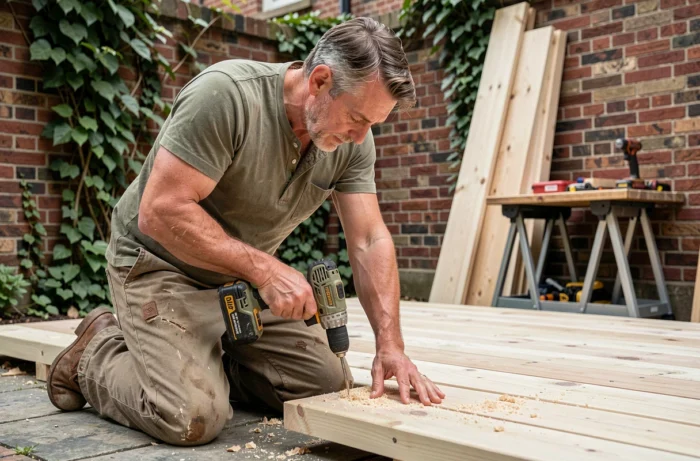
Wood deck and borders: installation mistakes that ruin a layout
Installing a wooden deck on poorly prepared ground guarantees warped planks by the first summer. Before any fixing, the ground must be excavated, leveled, and drained.
A compacted gravel bed under the joists prevents water stagnation. Without this draining layer, moisture rises by capillarity and accelerates the degradation of the wood, even if treated.
The spacing between the planks is a detail often overlooked. Wood swells with moisture and shrinks in dry periods. Allowing a few millimeters of space between each plank prevents deformation. For garden borders made of logs or sleepers, the same principle applies: anchoring them in the ground with a stabilized sand bed extends their lifespan.
Visible or invisible fixing
Visible screws remain the simplest method. They allow for the replacement of a damaged plank without dismantling the entire deck. Invisible fixing clips provide a cleaner look but complicate repairs.
Prefer stainless steel screws for all outdoor wood: regular steel rusts and stains the wood within months.
Garden regulation 2026: hedges, shelters, and clearing
A well-thought-out wooden garden can encounter legal constraints that many homeowners discover too late.
The unique hedge regime
A decree from August 28, 2026, established a unique hedge regime accompanied by a prior unique declaration for any destruction project. This measure comes into effect from October 1, 2026, in mainland France. If your wooden layout plans to replace an existing hedge with a fence made of palisades or a screen, first check if this hedge is affected.
Clearing obligation
Since January 1, 2025, any sale or rental of a property in an area subject to the legal obligation of clearing must mention this constraint. In municipalities exposed to fire risk, the owner must maintain a clear space around buildings. This directly concerns wooden layouts near property boundaries: a raised deck or a wooden garden shed backed by dense vegetation may pose a compliance issue.
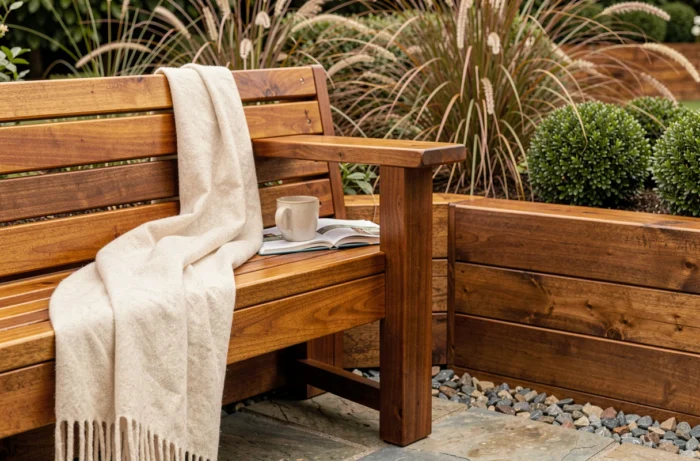
Garden wood maintenance: the calendar that makes a difference
An outdoor wooden layout requires maintenance suited to each season. Graying is not inevitable, but intervention must occur at the right time.
At the end of winter, a cleaning with clear water (no pressure washer, which opens the wood fibers) is enough to remove moss and deposits. This is the time to apply a saturator on decks and borders. The saturator nourishes the wood deeply without forming a surface film, unlike varnish, which peels off.
In autumn, clear the deck planks of fallen leaves that retain moisture. Shaded areas turn green faster: a hard brush every two months limits moss proliferation.
For wooden garden furniture, wintering under a breathable cover (no waterproof plastic tarpaulin, which creates condensation) extends its lifespan by several years.
The initial choice of wood species remains the most determining factor. An untreated black locust will require fewer annual interventions than treated pine. But regardless of the wood, an outdoor layout ignored for three years will ultimately cost more to renovate than to maintain regularly.