How can we measure the quality of daily care for an infant? Between official recommendations on safe sleep, new data on parental mental health, and the increasing involvement of the second parent, the guidelines are evolving. This article compares the main areas of vigilance for supporting baby, relying on the most recent French recommendations.
Sleep, care, and stimulation of baby: comparison of priority areas
Guides for young parents generally cover three areas: sleep, hygiene care, and sensory stimulation. Their relative importance in daily life varies according to the infant’s age and associated risks.
| Area | Critical Period | Main Risk | Key Guideline |
|---|---|---|---|
| Safe sleep | Birth – 12 months | Sudden infant death syndrome | Lay baby on their back, in their own bed, without a pillow, duvet, or bumper |
| Hygiene care (bath, skin, diaper changes) | Birth – 6 months | Skin irritations, infections | Products suitable for the infant’s pH |
| Sensory stimulation and motor skills | 3 months – 24 months | Developmental delays if stimulation is insufficient | Progression to be respected without skipping steps |
| Parental mental health | Pregnancy – 12 months postpartum | Burnout, perinatal depression | Seek help, consult if persistent discomfort |
This table highlights a often underestimated point: parental mental health conditions the quality of all other areas. An exhausted parent monitors sleep less effectively and stimulates less during wake time.
Parents looking to centralize this information on carnetdebebe.fr will find this type of guideline organized by age group, which facilitates monitoring over the months.

Safe sleeping for infants: discrepancies between recommendations and practices
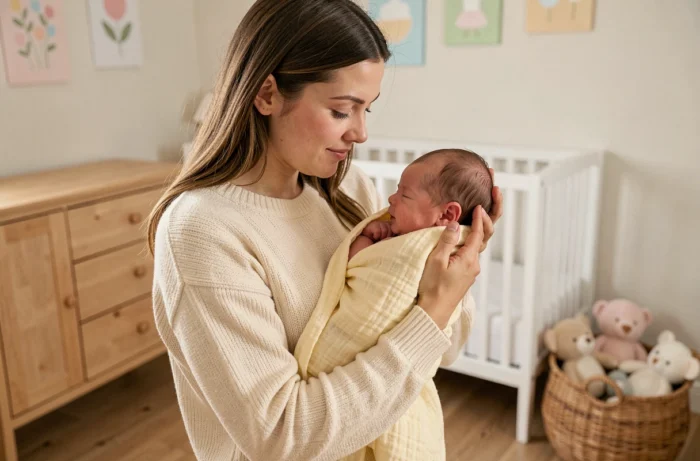
French authorities consistently remind parents of the same guidelines: lay baby on their back, in their own bed, without a pillow, duvet, or bumper. The room should not be overheated.
These recommendations are included in the resources for the first 1000 days and in official child health prevention pages. They aim to prevent sudden infant death syndrome, which remains a public health issue.
Why the bumper persists despite warnings
The bumper continues to appear in baby registries and childcare aisles. Its presence in catalogs creates confusion: many parents associate it with standard equipment. Official recommendations strongly advise against it because it poses a risk of suffocation and overheating.
The room thermometer, on the other hand, is among the truly useful tools. Maintaining a moderate temperature in the room directly contributes to a safer and more regular sleep for the infant.
Involvement of the second parent from the first weeks
One of the most significant changes in recent resources concerns the role of the second parent. The description of their role is no longer limited to moral support: it becomes operational from pregnancy.
Specifically, current guides mention:
- Participation in prenatal medical appointments to anticipate choices related to childbirth and returning home
- Daily management of bathing, diaper changes, and preparing bottles, including during the nights
- Shared monitoring of the infant’s sleep, which helps reduce the fatigue of the primary parent
This distribution has a measurable effect on parental mental health. Sharing nights reduces the risk of maternal burnout and improves the overall vigilance of the household regarding the infant.
Second parent leave and practical organization
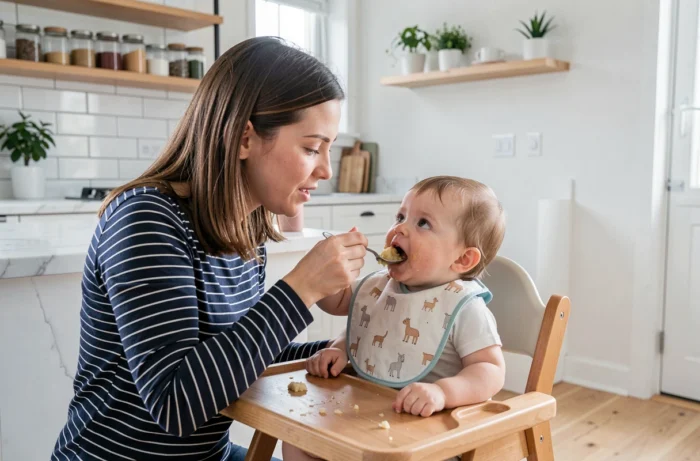
Paternity leave or second parent leave, extended in recent years in France, provides a window to establish these habits. Families that structure a support system from the first days find that care routines (diaper changes, baths, feeding) quickly become natural for both parents.
In contrast, when the second parent returns to work very early without having been involved in daily care, an imbalance sets in. It then becomes more difficult to correct over the months.
Parental mental health and daily support for baby
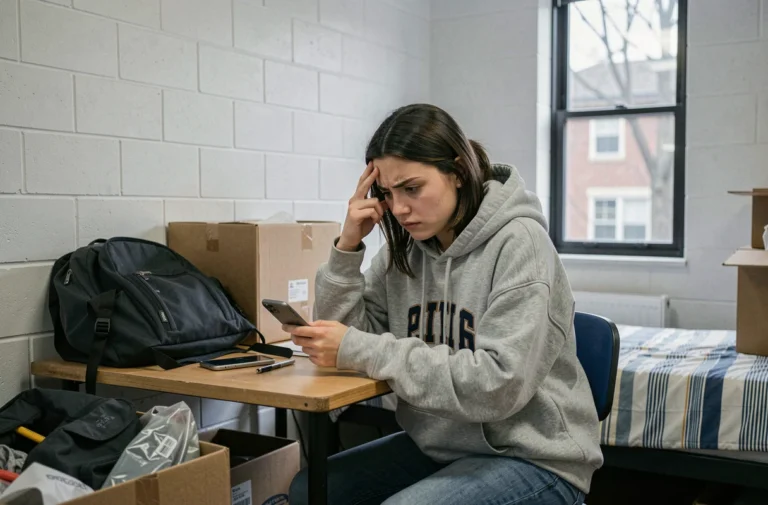
Psycom resources position parental mental health as a daily issue, not just a postpartum concern. The guidance is clear: seeking help is not a sign of weakness but a preventive measure.
The signals to watch for go beyond the typical fatigue of the first weeks:
- A persistent feeling of discouragement that does not lessen with rest
- A difficulty in feeling pleasure in interactions with the infant
- A gradual isolation, with a refusal to go out or see loved ones
- Repeated intrusive thoughts regarding the child’s safety
Psycom explicitly recommends consulting a mental health professional in case of discomfort, with a referral to emergency resources if necessary. Preserving time for oneself is part of preventive advice, just like the physical care of the baby.
Link between parental well-being and infant development
A parent in psychological distress responds less effectively to the infant’s signals. The reaction time to crying lengthens, verbal interactions decrease, and monitoring of sleep may become less rigorous.
This link between the parent’s state and the quality of support for the baby justifies the inclusion of parental mental health in childcare guides, and not just in specialized psychiatric resources.
The most structuring factor for daily care of an infant is not a care product or childcare equipment. It is the household’s ability to maintain two available, rested, and attentive parents. Recommendations on sleep, hygiene, or stimulation only work fully if the adults applying them are themselves in a position to do so.