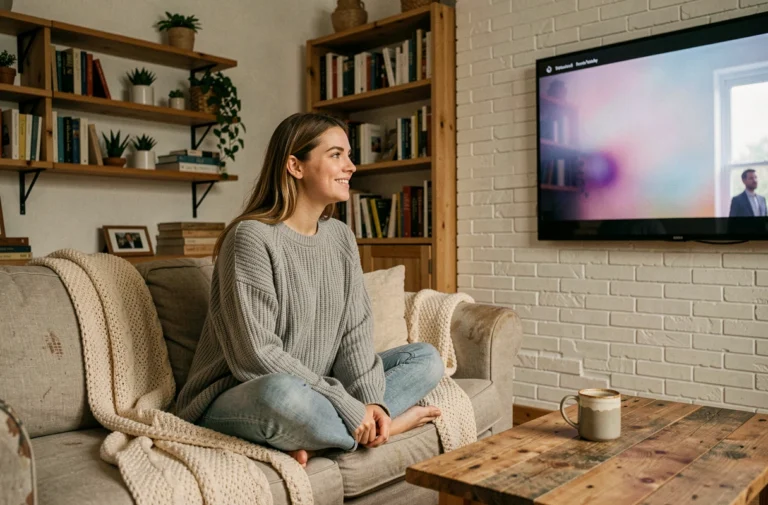
The distinction between decorative redesign and light renovation conditions everything else: budget, timelines, administrative constraints. Renovating and decorating your home requires mastering this boundary, because a simple change of wall covering can fall into the regulated domain as soon as it affects the thermal envelope of the building.
Decorative work or structural renovation: the regulatory limit to know
We regularly observe confusion between aesthetic refreshment and work subject to authorization. Repainting a wall, applying wallpaper, changing a light fixture: no formalities. However, as soon as the intervention modifies the load-bearing structure, the outer envelope, or the technical networks (electricity, embedded plumbing), a prior declaration or building permit may be required.
This distinction is absent from most “decor tips” articles, even though it determines whether you can act alone or if a visit to the town hall is necessary. Modifying a load-bearing wall requires a structural engineering firm, even if the final goal is purely aesthetic, such as opening a kitchen to a living room.
For interior insulation, the situation has evolved. Some isolated works are now excluded from the main funding pathway (like MaPrimeRénov’ mono-geste), while remaining eligible through other mechanisms such as energy savings certificates. Check the applicable framework before starting an interior insulation project presented as a simple “thermal redesign.”
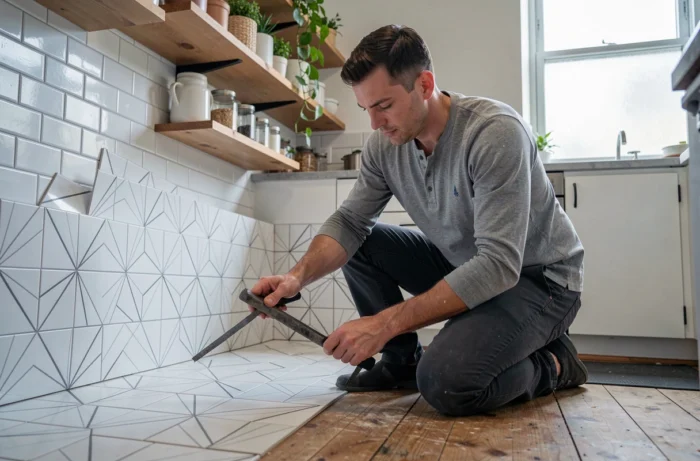
Decorative paints and coatings: technical choices for a lasting finish
Paint remains the most accessible transformation lever. We recommend not choosing solely based on color, but on three often-overlooked technical criteria.
Resources like Brico Déco Solutions allow you to cross-reference product sheets and user feedback on paints and coatings suitable for each substrate.
- The VOC rate (volatile organic compounds) affects indoor air quality after application. Prefer paints rated A+ on the mandatory health label.
- Resistance to wet abrasion, expressed in classes (class 1 to 5 according to standard EN 13300), determines washability. For a kitchen or hallway, a class 1 or 2 is preferable.
- The actual covering power depends on the opacity of the pigment and the substrate. A dark wall covered with a light shade will require a blocking primer, not just two additional coats.
Recent trends emphasize textured and organic finishes, in contrast to the smooth minimalism that dominated in recent years. Lime plasters, washes, tadelakt effects: these techniques require a preparation know-how (adhesion, moistening, number of passes) that sometimes justifies calling on an interior plasterer rather than a traditional painter.
The “drenching”: saturating a room with a single color
This technique involves applying the same color on the walls, ceiling, woodwork, and sometimes the joinery. The effect radically alters the perception of volumes. The drenching works best in small rooms where it eliminates visual breaks between surfaces and gives a sense of enveloping.
Be careful with the choice of finish: a full matte on all surfaces absorbs light and can crush the space, while a matte/satin finish on the woodwork maintains relief without breaking the chromatic unity.
Furniture and layout: renovate rather than replace
A solid wood piece from the 1970s often has a sturdier structure than its new particle board equivalent. Sanding, staining, or painting furniture (with alkyd or acrylic-polyurethane) can transform a dated dresser into a contemporary piece for a fraction of the cost of a new one.
Three points of caution when restoring old furniture: check for the absence of lead paint (homes built before 1949), test the chemical compatibility between the old varnish and the new product, and respect the drying time between coats to avoid dusting.
On the layout side, reorganizing the space without construction sometimes produces a greater impact than a purchase. Moving a sofa from the “against the wall” position to the center of the room, using a low shelf as a separator, or reversing the function of two rooms (office turned into a bedroom and vice versa) are zero-cost operations that profoundly change daily use.
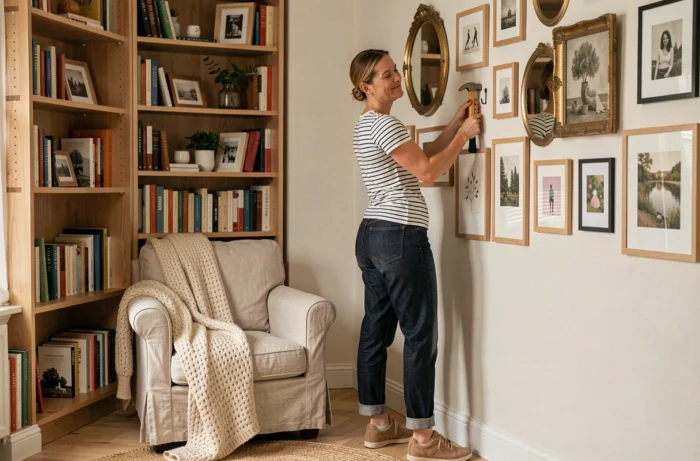
Lighting and textiles: the two accelerators of transformation
Lighting is the most underestimated parameter in decoration. Layering three light sources per room (functional, ambient, accent) is enough to radically change the atmosphere without any electrical work if you use plug-in or battery-operated fixtures.
The color temperature, expressed in kelvins, guides the ambiance: low values (around 2,700 K) produce a warm light suitable for living spaces, while higher values are suitable for work surfaces and reading areas. Mixing different temperatures in the same room creates a visual dissonance that we advise against.
Textiles: the most favorable impact/investment ratio
Curtains, cushions, throws, rugs: these elements represent the most easily replaceable colored and textured surfaces. Current trends favor raw materials (washed linen, boucle cotton, undyed wool) that bring a sensory dimension absent from smooth, monochromatic interiors.
A properly sized rug anchors a living area better than any piece of furniture could. The basic rule: the front legs of the sofa and chairs should rest on the rug to visually unify the whole.
Renovating and decorating a home does not necessarily require a significant budget or weeks of construction. The most cost-effective interventions target light, color, and textiles, three levers that transform the perception of a space without touching the structure. The only real trap remains confusing a decorative gesture with regulated work, which can block a project or generate unexpected costs.